VIP No.2 / 2022 Interview with Duplat

VIP No.2 / 2022 Interview with Duplat
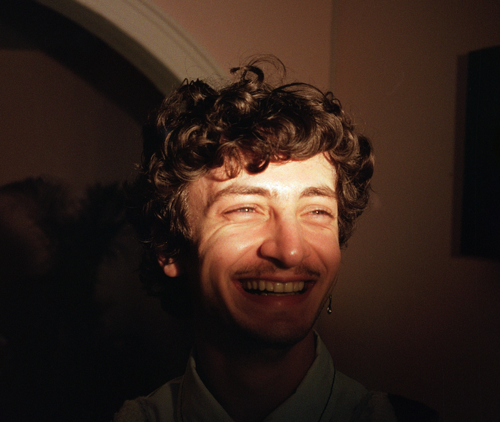
One of the best-kept secrets of the Bogotá music scene is undoubtedly Duplat. His songs are a direct encounter with countless stories, ranging from celebrating friends to experiencing the deepest heartbreaks. We spoke with him about his latest musical endeavors, what it means to grow up, and his performances at the Estéreo Picnic and Cordillera Festivals as one of the representatives of our region.
1. Since Espuma, his second album released in 2020, a lot has happened. Who was Duplat back then, and who is he now?
My ex-girlfriend sent me a poem, a really cool one. I think it's very common for everyone to tell you that you write poetry, but this poem was a paraphrase of the "rin rin renacuajo" (a type of tadpole), which said: "among those colorful rags, hides an 18-year-old boy, very sad, very sensible." I think it's a very beautiful and meaningful line. I feel I've always had a close connection to nostalgia and melancholy, very adolescent, and Espuma was that, an album by a disheartened teenager. Before, I felt that what I was doing was flat, boring when played live, especially because of all the time that's passed and how much I've played. Now, I want my music to feel powerful; there are still sad songs, but that's no longer the soul of what I do.
2. Let's talk a little about "Mañanas de Cristal" (Crystal Mornings), a song that speaks of the misfortunes of everyday life. What is a typical day like for Duplat, and what are those misfortunes that are always there?
I have a curse with October 31st; I hate dressing up. So, the one in 2021 was a day of breaking things off, a day when I cut ties with many bad friends. It was a day when I did it very suddenly. That song really inspired me that day. I've always been terrible at connecting with people, and that's one of those daily misfortunes. Also, I've always wanted to do so many things, and that torments me, but you learn that it's impossible. I dropped out of math, and I'm still thinking a lot about what to do with classical music. My relationship with my piano teachers is very stormy; for him, seeing me sing pop is a disgrace, and it's a constant fight. In the end, I really like that "that's just how things are" theme, but it's not about staying there, it's about growing, and that's what "Mañanas de Cristal" is about.
3. There's been a process this year with two other songs, "Todo sería más fácil" and "La vida está rara," two collaborations, by the way. What was the process like working with Rap Bang Club and Lika Nova (FEP2023)?
You know, I always mention Juan Pablo Vega, and he has something really cool, something he told me: "A collaboration has to come from camaraderie and friendship." In this case, I met Rap Bang Club at a Telebit launch. In my head, I thought that in the rap world I must be a nobody. But that wasn't the case, and we started meeting up in spaces with Karin and Pezca. I realized that I wanted the collaborations to be increasingly unusual. I showed them the demo and discovered that it's much better to be surrounded by someone who contributes things I can't do. I've known Lika Nova for a long time, and even though we're under the same umbrella, we've interacted a lot. That collaboration could have happened a while ago, but it didn't come to fruition until we became very good friends.
4. Speaking of your time at the Cordillera Festival, what does it mean to you to be Latin American?
It's something that really made me think. As soon as they invited me to the festival, I felt very conflicted. Everyone else there was singing about the suffering of the people, and I wasn't. But at the same time, I've come to understand that you speak about what your generation is. My parents went, and I found Piero's case very interesting. If you don't know who he is, it's like, "What's he listening to?" and I was listening to my dad, so moved. I don't think that's our language. So, I realized that my music resonates with a new generation, one that feels disoriented, caught up in the world of social media, technology, and the pressure of what to do with their lives. I feel very flattered that what I do is perceived as the language of Latin American youth.
5. Another important moment for Duplat this year was the Estéreo Picnic Festival stage. What lessons and memories did your experience at the festival leave you with?
Well, it was my first big festival, and it taught me a lot. I felt that some songs weren't right for that space, so I stayed to see many more shows. I realized that people with more experience understand what's needed live. That was the most impactful thing for me about FEP: stepping out of that bubble of playing at Estéreo Picnic and going beyond what we all want as emerging projects. Many people told me to be careful because for several bands, that was the ceiling. And it's true; I opened in the late afternoon. Conquering Estéreo is when you play at eleven o'clock at night and see a sea of heads. That's killing it at FEP.
6. Rumor has it that we're close to a new album. What are the details of this new work, when is it coming out, how many songs are on it, and what can we expect from Duplat in these lyrics?
This new album has been a crazy project. I wanted to stop performing for a few months because I want to have a huge launch and a massive concert. I even have members of the Colombian Youth Philharmonic involved. I want to release the album at the beginning of the year and build up to that moment, making the launch a real milestone. We already know four songs: “Mañana de Cristal” (Crystal Morning), “La vida está rara” (Life is Strange), “Todo sería más fácil” (Everything Would Be Easier), which is already out, and “Ahora es nunca” (Now is Never), co-written with Juan Pablo Vega. There will be five more tracks on what will be Autogol (Self-Goal). Musically, I'm happy with it; it shows the direction I want to take.
7. Finally, can you recommend one Latin American artist and one Colombian artist, and why?
From Colombia, I'm a big fan of Juan Pablo Vega. I know it's not surprising, but I've been close to his creative process, and he's at a very high level—very elegant, a great guy. And from Latin America, I really like Indios from Argentina. I feel there are better bands, but they have a song I really liked for its simplicity: “Todas las flores de Enero” (All the Flowers of January). And also, Bandalos Chinos.
Interview by Jaime Cortés